If you live in India, tanning isn’t a “sometimes” problem — it’s a “every single time you step outside” problem. One quick trip to the market, a two-wheeler ride to work, or an afternoon at a family function, and by evening your face looks a shade (or two) darker than the rest of you. Most of us have tried at least one tan removal cream that promised “instant fairness” and delivered… not much. So it’s worth asking the obvious question: is there a gentler, more reliable way to deal with this that doesn’t involve loading your skin with bleaching agents?
Turns out, Indian households have been solving this exact problem for generations, long before “de-tan” became a marketing buzzword. The answer sits quietly in almost every Indian kitchen and beauty cabinet — the humble ubtan.
What Actually Happens When Skin Tans
Before jumping into remedies, it helps to understand what tanning actually is, because that explains why some treatments work and others just sit on the surface doing nothing.
When your skin is exposed to UV rays, it produces extra melanin as a defense mechanism — basically, your skin’s way of protecting itself from further sun damage. That melanin sits in the upper layers of your skin, which is why tan doesn’t wash off with a regular face wash. It needs to be gently exfoliated away, layer by layer, as new skin cells replace the tanned ones. This is exactly why patience matters with natural tan removal remedies — nobody’s skin renews itself overnight, no matter what a product label claims.
Why Chemical Tan Removal Creams Aren't Always the Safer Bet
A lot of over-the-counter tan removal products rely on strong bleaching agents, hydroquinone derivatives, or high concentrations of acids to force quick lightening. They can work fast, but “fast” often comes with a trade-off — irritation, uneven patches, increased sun sensitivity, and for a lot of people, skin that reacts badly after a few uses. If you’ve ever had a tan removal cream leave your face redder than the tan itself, you already know what this feels like.
This doesn’t mean every chemical-based product is bad — some are formulated well and tested properly. But for daily, ongoing use on your face, gentler and more skin-respecting options are usually the safer long-term habit, especially in Indian summers where the sun exposure never really stops.
The Ayurvedic Ubtan Advantage
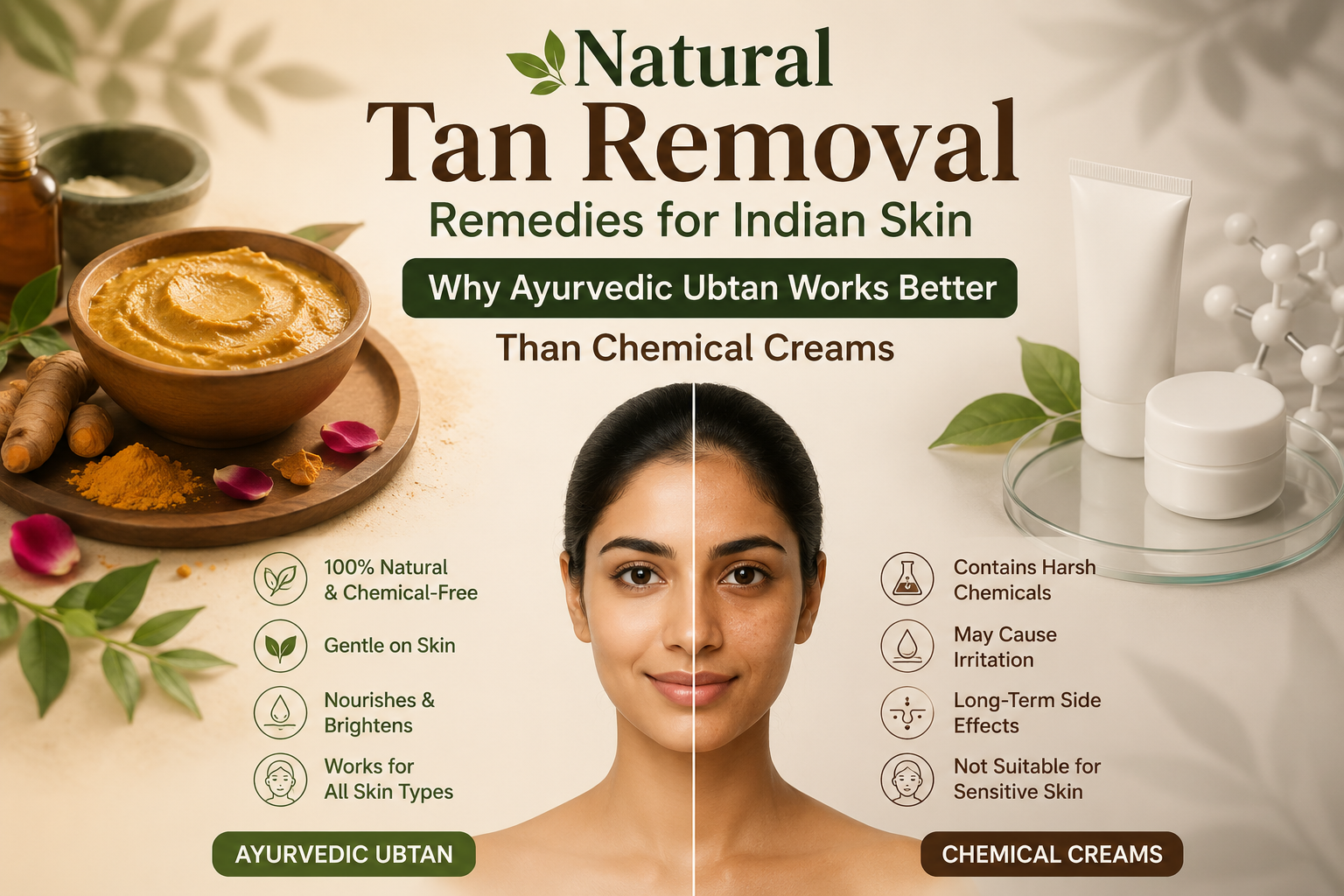
This is where ayurvedic ubtan genuinely earns its reputation. An ubtan isn’t one single ingredient — it’s a blend, traditionally made from gram flour, turmeric, sandalwood, rose, neem, and multani mitti (Fuller’s earth), each doing a slightly different job:
- Turmeric contains curcumin, known for helping even out skin tone and calm inflammation
- Sandalwood has a cooling, astringent effect that helps tighten pores and soothe sun-irritated skin
- Multani Mitti absorbs excess oil and impurities, which is a big deal in humid Indian weather
- Neem brings antibacterial properties that help with any breakouts triggered by sweat and sun exposure
- Rose adds hydration and a mild toning effect, balancing out the drying nature of the exfoliating ingredients
None of these work like a bleach. Instead, they work with your skin’s natural exfoliation cycle — gently lifting away the tanned outer layer while nourishing what’s underneath. That’s a meaningfully different approach than “lightening” skin chemically, and it’s part of why de-tan face packs based on ubtan have stayed relevant for centuries instead of fading out like most beauty trends do.
How to Actually Use an Ubtan for Tan Removal
This is the part most blogs skip over, but technique genuinely matters here. A good ubtan routine looks like this:
- Start with clean, dry skin. Don’t apply it over makeup or sunscreen residue.
- Mix a small amount with rose water, milk, or plain curd — not water alone, since dairy and rose water help the paste glide better and add mild brightening benefits of their own.
- Apply an even layer across the face and neck, avoiding the delicate under-eye area.
- Let it sit for 12–15 minutes, not longer. Ubtan is meant to dry lightly, not crack completely — over-drying can actually pull moisture out of your skin.
- Dampen your fingers and massage in gentle circular motions before rinsing. This is the exfoliation step, and rushing it or skipping it means you lose most of the tan-removal benefit.
- Rinse with lukewarm water, then follow up with a light moisturizer, since exfoliation always leaves skin a little more receptive to hydration.
Use this two to three times a week — not daily. Over-exfoliating tanned skin can backfire and cause more irritation than the tan itself.
Setting Realistic Expectations
Here’s something most product pages won’t tell you honestly: no natural remedy removes a deep tan in two days. If a product promises that, be skeptical. What an ubtan-based routine realistically does is gradual — most people notice a visible difference in tone and texture over two to four weeks of consistent use, not overnight. The tan fades in layers as your skin naturally renews itself, and the ubtan simply speeds that process along while also improving overall skin texture, which is arguably the more valuable long-term win.
Preventing Tan From Coming Right Back
Removing tan without addressing the cause is a losing battle, honestly. A few habits that make a real difference:
- Sunscreen, even on cloudy days — this is non-negotiable if you’re serious about staying tan-free
- Reapplying sunscreen every 3–4 hours if you’re outdoors for long stretches
- Covering up with dupattas, scarves, or caps during peak sun hours (11 AM–3 PM)
- Hydrating well — dehydrated skin tans and pigments more visibly
When It's Worth Seeing a Dermatologist
Natural remedies work well for regular sun tan, but if you’re dealing with deep, patchy pigmentation, melasma, or tan that hasn’t budged despite months of care, that’s a sign to consult a dermatologist rather than continuing to self-treat. There’s no shame in that — some skin concerns genuinely need clinical attention, and a good skincare routine should complement professional care, not replace it when it’s needed.
Frequently Asked Questions
How long does it take for natural tan removal remedies to show results?
Most people notice a visible difference in 2 to 4 weeks of consistent use, 2–3 times a week. Tan fades gradually as your skin renews itself, so daily overnight results aren’t realistic with any natural remedy.
Can I use ubtan on sensitive skin?
Yes, generally — ubtan is gentler than most chemical tan removal creams. That said, always patch-test on your inner arm first, especially if you have very reactive or eczema-prone skin, since ingredients like turmeric can occasionally cause mild sensitivity in some people.
Is ubtan safe to use every day?
No. Using it 2–3 times a week is ideal. Daily use can over-exfoliate the skin and disrupt its natural moisture barrier, which often makes tan and dullness worse, not better.
Does ubtan work on body tan too, or only the face?
It works well on body tan too. Many people use it as a bathing powder for arms, neck, and back, not just as a face pack — the exfoliation and brightening effect works the same way on body skin.
What's the difference between ubtan and a regular scrub?
A regular scrub mainly exfoliates. Ubtan exfoliates and nourishes at the same time, since the herbal ingredients (turmeric, sandalwood, neem, rose) offer additional skin benefits beyond just removing dead skin cells.